
Hiring for Potential in Biotech: Lessons from 25 Years of Recruiting
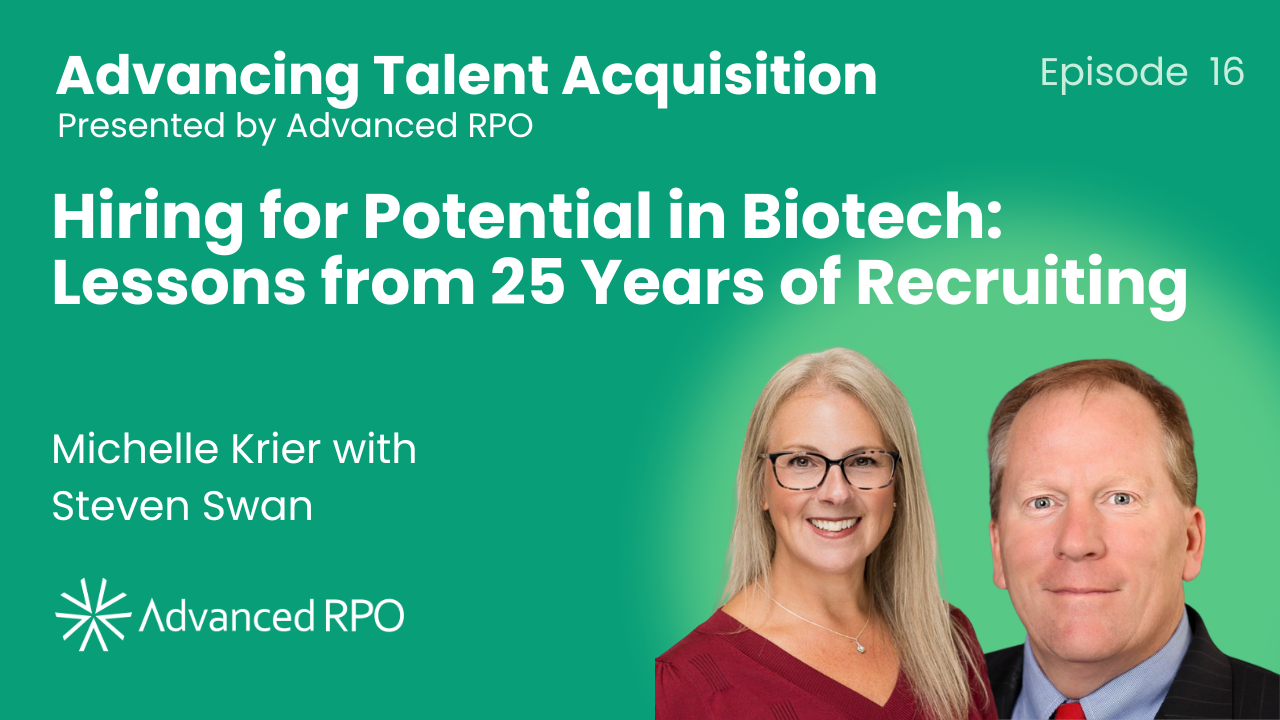
Steve Swan shares what’s changed – and what hasn’t – about hiring the right leaders to drive innovation in biotech.


Summary
In this episode of Advancing Talent Acquisition, Michelle Krier sits down with Steven Swan, CEO of The Swan Group and host of the podcast Biotech Bytes, to explore how biotech hiring has evolved over the past 25 years. Steve shares how the industry shifted from valuing potential to seeking “perfect match” candidates—and why it’s now swinging back toward hiring for aptitude, cultural fit, and soft skills. He discusses the critical role of clean, well-governed data in accelerating biotech innovation, the growing demand for consultative recruiters who can uncover candidate motivations, and why the human “work in the middle” will remain essential even as technology reshapes the hiring landscape.
Episode 15
Michelle Krier
Welcome to Advancing Talent Acquisition, the Advanced RPO Podcast. Today I’m joined by Steven Swan, CEO of the Swan Group and host of the Biotech Bytes Podcast. Welcome, Steven. Thanks for joining me today.
Steven Swan
Thanks for having me. This is great. I’m excited.
Michelle Krier
I’m excited too. You and I had the chance to talk, I think it was last week, very briefly, kind of talked a little bit about what we were going to cover today. Before we get into that though, I just found your background and your experience and your story so fascinating. So. I’d love it if you would just share that with our listeners who may not know who you are or have had the chance to talk to you before.
Steven Swan
Sure, real brief intro. I am Steve Swan, owner and president of the Swan Group. Been doing this for 26 years. Took over from my mother, Barbara, who did it 50 plus years. She started getting into recruitment. I’m one of four boys. I’m number three. That probably says something about me. I don’t know. But ⁓ she got into recruitment because she needed to help. She needed help around the house, domestic help around the house.
So her and a neighbor looked through the yellow pages, didn’t find anybody that could get them a babysitter. So, they started interviewing and placing what we call today nannies, but it was babysitters back then and then grew it to about a half a dozen offices and then got into executive assistants. And then she got adept at different typewriters as to different executive assistants would use. And that was technology. That was technology back then. So, she became the technology guru. And the rest is kind of history. I joined her 26 years ago and all we do is technology of all shapes and sizes to biotech and pharma. And that’s where we are today in New Jersey.
Michelle Krier
That’s awesome. I love that story so much. know, every once in a while, you talk to somebody who talks about their roots in staffing and or recruiting and it comes out of something like that. Somebody had a need for something confined. It started it and it has evolved into something just phenomenal. So, I love that story.
Steven Swan
Yeah, it’s awesome. She was always after me to join her and finally, right before we had our first little one who’s now 25, I said, sure, let’s give it a shot. And here I am today still doing it. So, it’s fun.
Michelle Krier
Are any of the siblings involved in the business at all?
Steven Swan
No, they’re not. None of them are. She never asked any of them. I don’t know. I guess or the only one that could take the beating. I’m not quite sure which.
Michelle Krier
You’re the special one that if she asked you to join.
Well, you know, with all of the great experience you have in the biotech and pharma industry, and certainly with the IT professionals, I know that you’ve seen over the years just how much the industry has evolved and shifted. From your perspective, what has been the biggest shift that you’ve seen? And it could be, you know, related to the IT profession in general or could be related to the industries that you’re in or anything else for that matter, technology, whatever it is. But I just love to hear from your perspective when you started versus where right now, like what has been the biggest shift?
Steven Swan
I think the biggest shift in my mind that’s taken place is hiring managers and companies have gotten really used to finding the candidate that’s got exactly what they’re looking for, right? you know, 26 years ago, was kind of like, you know, get me somebody with some of these skills and get me somebody that does this, this and this. But I would say that a lot of what goes on today is really finding that individual that’s got all the nice to haves and all the must haves all at same time. I think it got so myopic, right? It’s got so specific and they’re finding it because we can find it, right? Now it’s a matter of finding it versus attracting it versus closing it, right? That’s a whole different, we can get to that later, but actually finding them and individuals that have all those skill sets, you can do with technology, which technology has helped us do that, you know?
Michelle Krier
And I’d love to hear your perspective too, just on companies needing to have a more open mindset even about hiring for aptitude, right? Technology is changing really, really quickly right now and evolving. And there are skills that are needed out there that aren’t being taught right now, right? A lot of it is kind of learning as you go and whatnot. So, I’d love to hear your perspective and kind of what you’re seeing and hearing, like how open are companies, especially when it comes to IT professionals around hiring for aptitude or similar experiences or ability to learn versus actually having all of the skills that they need.
Steven Swan
So it’s kind of weird because what I just said is how we’ve come all the way to a point where the companies have gotten real myopic. At this point today, as I sit here, we’re probably as far from the exact candidate as we were 20 plus years ago. And here’s why, because, well, let me go all the way back. So, my mother always went, she got people ready for interviews. She would say the top three skills you have to have during the interview process is a good attitude. know, good attitude, good attitude, good attitude. it would, like you just alluded to, it would work. was great. know, hiring managers wanted that.
What I’m finding right now is with everything that’s going on with AI and the internet is that companies are having a tough time filling these roles because they’re getting flooded with candidates. They’re getting, you know, AI is finding them folks with exactly what they’re looking for. Good and bad. Reason why that’s bad is because the candidates are writing their resumes to fit all the stuff to get past the AI then to the human. And what managers are telling me, they’re calling me and saying, okay, listen, I just interviewed four people and none of them can substantiate what’s on their resume. You know, they’ve written their resumes to get by my AI bot, and I got the resume and here I am talking to this person, and they can’t really you know back up what’s on the resume. So you know they are starting to come to me some of them are coming to me and saying okay get me somebody that’s got maybe half of what I’m looking for but they got to be able to get along with the team have the right personality for my organization be driven by this this and this. So, we’re getting to that ⁓ but ⁓ it’s not all the way across the board. So I think that we’re closer back to what we just talked about there from 26 years ago looking for the person with the good aptitude and the great personality just because of being inundated by AI and AI fighting AI with AI is leading them down a I don’t know dead end street almost sometimes.
Michelle Krier
Well, and the EQ, those types of skills, that’s the area when it comes to AI, everybody loves AI, right? Everybody’s talking about how AI can do more for companies, especially when it comes to recruiting and to the point you just made. But it’s not, I still don’t see, at least right now, may change in the future, it being able to actually gauge the right cultural fit, the ability to be curious and inquisitive and to learn and those skills, the softer skills that actually, when partnered with the technical knowledge and the job skills, make you an incredibly strong candidate. So that’s a gap right now too. And I’m just curious, how are you evaluating some of those things based on that feedback that you heard from that hiring manager?
Steven Swan
Well, so storytelling is key, right? It’s always been key, right? Being able to tell a story, being able to connect the dots and things like that. Even folks forever that have been involved with technology, the ones that can tell a story and can work with business become the more successful ones, right? They’re both technical and business, you know, business-facing. and AI or computers yet can’t really do that, right? it’s going to be great at finding you, I don’t know, a car, right? But you got to be able to check the boxes: AM FM, Sirius XM, leather, sunroof. You can’t do that with people, right? Cool person, what’s “cool person” mean, you know? Or flexible person, what does that mean, you know? So, again, I always call it the work in the middle. The work in the middle, once you qualify the person before the offer comes. The work in the middle is understanding, you know, the cultural fit, understanding that person, understanding the company, I call them drivers, right? Understanding the company’s drivers, understanding the individual’s drivers, and putting those together- the best situations are when you put those together, or in my opinion, the only situations are when you put those together and when you put those together, it’s a win-win on both sides, AI can’t do that. I had a, a post that was going around on LinkedIn, I’d say it was about six months ago or so. And one of my friends that I’ve done a podcast with on my podcast, Biotech Bytes, he’s a CIO at a biotech and he disagreed with me. He said, well, AI can figure that out. AI knows about different personalities and different inflections in your voice. He said like for example when there’s a gap in there the AI may pick up that the person’s not totally telling the truth or the person is as strong as they should be in that technology and I shot back, and I said what if English is their second language? What if they paused during that sentence to try and think of the right word? Is AI going to know that? I don’t think so, at least not yet. I mean maybe someday it will. So I don’t think that we’re replacing matching EQ with what the firm needs, but then you’re also using your own knowledge and ability that you’ve gained over the years of interviewing folks to understand, you know, doing this for 26 years, I can pick up on somebody pretty quickly on the phone, right? And you’ve been doing it for a long time too, right? So, you know, and you can pick those inflections up and you know what’s going on the other end, as opposed to just straight up looking at skills and saying, well, they’re a match, they’re not a match.
I’ll make another point. had a friend that went to a large company, real large company in this country and she was recruiting for them. She was on a contract. Well, she only made it three days because they were telling them to use AI to find the folks. Don’t interview them. Don’t talk to them. Don’t gain any knowledge. Just forward it to the hire manager. And she’s like, what am I doing then? You know, she’s more of the relationship kind of person and that’s why I do so well with her because she likes storytellers, you know, and she’s a storyteller herself, you know, so anyway.
Michelle Krier
Right. Yeah. Well, and I think the cultural match is so important too, right? Because how many times, and I’ve seen this myself, somebody who comes from a very large enterprise organization now is it more of a startup. They don’t necessarily know how to function in that environment at all because they’re used to having layers and layers of management, bureaucracy, and people, and teams. And you go to a startup, and you’re hands on in that environment. And I think being able to translate experiences or ask the right questions of somebody to understand are you actually going to be able to make it in this type of environment or not is huge. Yeah. Yeah.
Steven Swan
It’s a huge difference. Yeah, it’s a huge difference. You know, the person at the small company and one gentleman put it pretty plainly to me several years ago. When you’re at a small company, you’re your own strategy. You have to develop your own strategy for everything you do. When you’re at a big company, even when you’re high up at a big company, strategy is given to you. This is what you’re going to eat for lunch. Figure out how you’re going to eat it. When you’re at a small company, like, well, I don’t even know if we have lunch, but you figure out how to go kill it and maybe you’ll get lunch today. I’m not too sure, you know. and by the way, there’s no forks and knives. So, figure that out too, so it is a totally different mindset. I agree with you. It’s night and day.
Michelle Krier
Yeah, yeah, absolutely. I want to talk a little bit about the industry that you’re in because I think it’s so fascinating to have a niche and be so incredibly successful like you’ve been over the past two plus decades. What are you seeing when it comes to the types of talent? What is this industry is moving so quickly right now, right? And there’s so much going on in it. Like, how are you seeing needs evolve from these companies that are, you know, trying to get things to market more quickly? And, you know, there’s just so much happening. ⁓ Yeah.
Steven Swan
It is. I think that with the technology that’s coming of age, you know, to go back to it, AI, I mean, it’s certainly a huge, huge advancement and it’s going to keep getting bigger and bigger. You know, on my podcast, what all the CIOs talk about is before we get to that technology, which is awesome technology, we got to make sure that a little further, you know, upstream, our data is ready to be fed into that AI because it’s all about, it just consumes data because it’s got to figure out what the trends are, what we’re doing or how to process something or how to think about something. But it takes data to do that. It doesn’t just do that in a vacuum. And if your data is not ready for that, I mean, and I asked several of these CIOs that are on my podcast, you know, what’s the one thing you would do? And they all talk about the data, you know, it’s the gasoline that feeds the technology slash AI engine. And if the data is not ready, you know, you could build the greatest technology. It doesn’t really matter.
So what I’m seeing is a change in, they’ve always liked, you had data warehouse and then you had data leaks, and you have big data. It’s all kind of led into this, right? It all has led into this. We’ve just changed the name over the years, but you know, about business intelligence and analytics and AI, it’s all, kind of led into the same thing, but data is becoming much more prevalent. And I’m also seeing the PE firms and venture capital firms really get into the data side of things from every angle all the way to the generation of the data, right? With the CROs, they’re buying up CROs and such. So, they can actually not only own the data, but own the generation of the data, right? And just get it out to wherever it needs to go because data is everything right now. You know, you’re if you got data, or Superman.
Michelle Krier
And the data piece even from a recruiting perspective is so key, right? I mean data informs everything. It helps you make decisions. There’s so many things there. You know, I’ve seen so much where hiring managers just – they don’t understand recruiting. Just get me the right person. Let me talk to them and a story done with it. Like because they’re taking that data angle to it, are they a better judge of talent? they Still nothing. Not it hasn’t evolved there.
Steven Swan
It’s no. It hasn’t because you know, data is such so they don’t know what they don’t know, right? And so, they need somebody to handle their data whether it’s data curation, whether it’s data engineering, whether it’s data quality, whether it’s data cleansing, whether it’s data gathering, whatever it is. You know, I had one gentleman, I can give you a million examples. I have one gentleman come to me who ⁓ was a VP in a medium-sized pharmaceutical company took a new role and he calls me he says, “I have associate directors and directors of data science they’re triaging our data. They’re fixing our data and I’m spending, you know, for an associate director, director, you’re going to spend anywhere from 200 to 250 on the base plus bonus and equity and such.” He said, “I shouldn’t be spending that much.” And I said, “No, you shouldn’t.” I said, “What you could do if you really wanted to is you could create a farm team at your company. You could hire, you know, maybe even data science type of kids out of school or data engineering kids out of school, where you would have, you know, promise them two years, two and a half years in that role, right? Otherwise, their brains would go numb if they went longer than that, but they can your data and they can work on your data and they can get to know your business. They can get to know your company. They can handle your data for you and triage that data. And they’re getting 80, 100, 120 at tops, right? Base. And then they can feed it to your data science director or associate director, you know, but promise them that they’re going to move into.” So, it’s almost like a training program. Like I said, it’s almost like their minor leagues, which would be a great thing, I think for some of these organizations and that’s just one idea or one example I can come up with but they haven’t gotten better at judging that and they all are trying to figure out how to find the right mix.
I had another CIO come to me once with a company and they said she said I need a head of AI. I said “Okay cool what does that mean like what are we solving for right because we got to know when we’re putting AI in place what’s the use case what are we solving for?” “Well, I just don’t want to be left behind.” I’m like, “I’m not your guy. That’s in three months. If you don’t know what you’re solving for, you’re to create this long math equation It’s not going to be solvable. And then it’s going to be my fault because I got the wrong person because I didn’t know what I was looking for, you know, or why.”
Michelle Krier
And that is, that’s the crucial question, right? It’s not, is this, why is this, why are you looking for this? What, what skills do we need to like, what are you trying to solve for? Like, what is the pain in your organization that filling this particular role is going to solve? And I don’t think enough companies think about that to your point. It’s like, well, I don’t want to be left behind or we’ve heard so-and-so has this title so we need that in our organization, or you know whatever it is without really thinking about the business impact that the role can make.
Steven Swan
Because, you know, when I look at something or when we see something, the folks that know what they want and the folks that have a timeline and to fill it and, you know, the ones that are the best to work with, sorry to say, are the ones that, like you just said, do have pain. What is the pain point? So, it’s real defined. The pain’s right here. So, let’s solve to make sure this pain goes away. And the business has that pain. Everybody has that pain. So, the resource is both from a time perspective and a financial perspective are put behind solving that pain point, right? With AI, it’s more right now with that technology, it’s more, well, I don’t know, somebody was golfing with somebody over the weekend, and they said they’re making a lot of money on it and it’s the thing they’re supposed to be doing. So, they need to put it in place and is that a pain point or is that a kind of a FOMO? It’s more of a FOMO kind of thing. A lot of it. Now don’t get me wrong. There are use cases when they’re reviewing contracts, when we’re going through a lot of clinical data or on the research side, right? It’s been put in place with a lot of research organizations. So, there are a bunch of use cases and there’s a lot. So, to sort of prove that point, this past Christmas, I had a panel CIO discussion with I think eight or 10 CIOs anyway. ⁓ And then the Christmas before kind of talked to the same group. So, two Christmases ago, there was one use case between, those eight or 10 folks. This Christmas they each had four or five use cases. So, it’s moving, you know, it’s cool stuff. It’s great, but we’re still getting there.
Michelle Krier
I want to go back to something you touched on a little bit ago, and that was encouraging somebody who said, why am I paying X number of dollars to this data scientist? I shouldn’t be paying this much. And you came back with, well, here’s an idea. Let’s look at maybe bringing in somebody out of college, give them some experience, but at least have a plan then to move them into another role. I feel like there aren’t enough companies out there providing that type of consultative experience to their clients. It’s just about, I’ve got this need. Okay, here, let me help you with it, right? And I think too often, and I know I found myself guilty of this as well. When you’re in that environment, that situation, that pain, whatever it is, you can’t really, you’re limited in your thinking. Bringing somebody else in who’s got a fresh perspective, not connected to it, has some subject matter expertise for sure, can say, have you thought about this? Have you thought about that? Here are some options for you. Talk a little bit more about how you do, all of us that are trying to help clients solve these talent related issues can maybe do a better job of really taking a step back and providing some counsel and thinking about solutions.
Steven Swan
Yeah, I think we’re too quick to jump to, you know, if I own a hammer, every problem looks like a nail, right? So, let’s think about what we’re thinking about. Let’s look at the whole landscape. You know, when we’re talking to a company, if it’s a small company and they need a head of IT, you know, okay, well, let’s think about that. Are you about to go commercial? Do we need somebody with commercial? Are you more focused on your research? Is your founder, which lots of times they are scientists, right? So maybe we got to have somebody with R &D in there. Maybe you were just breached, you know, security breach. Maybe you need somebody that’s more focused on security, you know, so there’s a lot of different things and I think we jump too quick to, okay, let me get your resume. Whoa, whoa, whoa – even when you’re inside a company, lots of times even when you’re a project manager, business analyst, whatever you are – you need to sit down with the business and understand what they need, even when you’re inside. But why can’t we do that externally, right? So, let’s sit down and let’s talk to them. I know they say they need X, but let’s understand what X means. I’ve even spoken to a lot of CIOs who to further this point, they hire people to come into their company. And first thing they do is they basically, when it comes to AI, let’s all get on the same page. Here’s the terminology. Here’s what a web browser is. Here’s what an ISP is like from the nineties, right? When nobody knew what any of the internet stuff was, you know?
Same thing with AI right now. That’s kind of where we are. We’re in the wild west and let’s all get on the same page. Just like when somebody comes to you with a potential search or potential problem that they have. Maybe they don’t have a problem, you know, they come to you, and they say, hey, I need X, or I need Y, or I need Z. Well, let’s talk about that. Let’s think about what we really need. And, you know, I’ll go back through my 26 years of experience. This is where the where the science part comes in, right? Because I think what we do is half science, half art. And so, you get the science part of it. But then there’s a lot of art, right? Because you got to kind of figure out what fits where because no situation is exactly the same as it was as some other.
Michelle Krier
Right. what somebody asks for is not necessarily what they need. Right? Because, and they don’t know that. Right? And that’s why having a conversation with them to really understand, maybe you, and I’ve had this before, I may not be the one to solve it for you because now I truly understand what it is, but I am more than happy to introduce you to somebody who can. Right? And that’s the best that, there’s nothing wrong with that either. Yeah.
Steven Swan
And they don’t know that, right?
100%, I’ve done that. I’ve done that a ton and you know what, quite frankly, you get a lot of respect when someone says, because you know how to fix a break. I’m more a starter motor kind of guy, right? You know, but let me show you the brake specialist, right? Same sort of thing. I just can’t do that. That’s not my wheelhouse. I’ve never worked on the brakes of an Acura, only VWs. You know what I mean? So whatever it is, And when you get the respect of somebody, you didn’t waste their time, but they’ll stay in touch with you and know if they do have a need if they if their Acura does break they’ll come back to you on that one right so yeah.
Michelle Krier
I’ve always been a big fan of that. I was taught that very early on by someone you’re right, you earn respect, and they’ll come back to you again. You may not be helping them right now, but they will remember it, and they will, they’ll come back to you for sure.
Where do you see the biggest risks? Or you could maybe look at the other way. Maybe you want to talk about the opportunities. I’m not sure I’ll let you decide. You know, for the industries that you’re working with right now, and for the types of positions that they come to you to help fill, like, what are you seeing going on in the industry right now?
Steven Swan
I think the biggest, well, I’m going to go back to the data thing, right? I mean, it’s the biggest opportunity for these organizations to really get to the next level and they’re doing it. Unfortunately, there’s no way that they, they can’t share their data, right? So, there are big opportunities in, and like I said, the PE firms have figured that out. So, they’re buying up these little data companies and these data companies. And when I say little, they’re not the size of IQV or whatever, but they’re not super small, but they’re smaller.
I think the biggest opportunities are in the data and the data cleansing and the data curation and selling the data and you know, making sure that the data is ready for AI because AI is not going away. The technology is not going away. It’s here to stay and it should be and it’s going to make us all better, faster, smarter. So, I think the biggest opportunity is the data, but the biggest risk is the data too because if we don’t check what we’re doing, you know, and this stuff starts hallucinating or learning on itself from wrong data.
That’s a race to the bottom, right? So, we got to make sure we’re doing it all right from the get-go. Again, I asked several CIOs what they see as, you know, if you were a new CIO coming into, your company, Mr. or Mrs. CIO, what would you suggest I think about? they, all of them, almost all of them said, get your data ready. Watch your data, think about your data. Now, there’s a security component around data too, right?
So we got to think about all that too. And a lot of them have been forced to do that. And lot of the boards and boards of directors focus on obviously security, but also the governance around AI. And what they really mean is governance around the data. Who’s taken our data? Where’s it gone? You know, that kind of stuff, you know? So that’s a huge, huge component. And that is a risk, a big risk for them,
Michelle Krier
What are you most excited about when you think about industry? And I’m specifically talking about not the biotech industry, but the business of recruiting and talent and all of that. What excites you the most when you think about the next few years ahead? Again, AI being incorporated, and it doesn’t have to be, again, with AI, but just where are the industries headed?
Steven Swan
I never get asked this question, which is awesome.
Michelle Krier
Really? No.
Steven Swan
Yeah, I swear to God, but I love it. No, because I think about it all the time. The thing that excites me the most is where we are right now and where we’re heading, right? So, by that, mean, think that there is, we just talked a minute ago about the pain. When there’s pain somewhere, you get to help and solve it. And where the pain is growing and it’s going to continue to grow and we’re all going to be able to solve it, because we’ve all been riding this bike for so long, is there’s going to be a huge gap in, again, I’ll go back to it, the work in the middle. We’re getting away from the work in the middle. And the longer this goes unaddressed, the tighter that spring’s going to get and the harder it’s going to pop and the more the need’s going to be there for folks that, it’s a human business, we’re still people, that’s not going to change, that’s not going away. I mean, for the last 100,000 years, right?
It’s people hiring people, which adds to a culture, which adds to a bottom line, which adds to everything, right? It’s not computers hiring people. It’s not AI hiring people. We can again use that to identify which is perfect. That’s what we’re supposed to do, but that work in the middle to really understand your drivers and what you need and what you want and where you’re going and where you want to go. That’s what I’m here to solve to help you get to where you want to go. But then the company as well, cause the company’s not going to know a lot of companies think they’re getting away with something when they hire somebody for a lower salary and I coached them on that because guess what? Someone’s going to come in and pick them off and now you’re doing this again. You don’t want to do this again and they don’t like hearing that they got to pay 15,000 more for this person but you know, if you’re going to pay them 120 versus 135, and someone else going to come in at 140 in a year, if you’re 125 or you’re 120 or you’re 135, big gap, 140 to 135, small gap, right? So anyway, I think that there’s going to be a lot need and a lot ability for folks that have been doing, been a, what everyone would it, a talent consultant like we’ve been, we’ve all been. You know, it’s just going to grow more and more, because.
Right now, there’s a lot of folks that are quite frankly leaving the industry. They’re just they’ve had enough. They’re just like, I’m out. I’m done, selling their businesses or just walking away or both, my mom, like I said, she did this forever. She’s still alive and she’s 86 now. So, but she walked away probably five years ago. She just said, you know, uncle had enough. Sometimes she wishes she could come back in and say technology got away from me. But the fundamentals never go away. You know, 75, 80 percent of it’s still the same, you know, so, I’m sorry to say, back to basics is what excites me, you know? I don’t know.
Michelle Krier
Yeah, well, that’s true, right? Because like we were talking about earlier, being able to understand what motivates somebody, what they’re looking for out of, out of their career, out of the next step for them, right? It may not align with, with what the company’s offering. And I just got a text message this morning from somebody who’s in an organization, very unhappy with I don’t want to say a policy that came up, just the CEO documenting what the expectations were. And for her, she was unhappy about it and somebody else wouldn’t be. So, she has the skills she obviously successful there, doesn’t like, one of the things is we want our people to be internally on teams, on camera. She doesn’t like that.
And I’m like, okay, well, they feel that as very transparent and being connected and present with each other. And she doesn’t want to, right? So again, there’s nothing right or wrong, but she just doesn’t like that environment and that’s not for her. Yeah, exactly.
Steven Swan
I’ve got to be honest with you. That’s part of why I think internal recruiters and any internal recruiter that watches this is going to say I’m crazy. Why I think internal recruiters are at a disadvantage to what we do externally. Because when I call somebody, if I call you to interview you, you don’t have a description for me. You don’t know the name of the company yet. You’re going to know that by the end of my call and you’re going to have the description by the end of my call. First things first, let’s talk about you. What are your drivers? Where do you want to live? How often you’re going to go into the office?
What’s your personality like? And you can pick that up on the phone. What kind of place have you worked at? Right? We can tell big, small, we can tell consulting, whatever. We go through all that, you know, in skill sets and things like that. And then, you know, by the end of the conversation, they’re going to know the company, they’re going to know the manager, they’re going to know the dollars. But I know all that stuff, what they want before they know this. So, they can’t feed me back an answer that fits what they think I’m looking for. That’s why I think the internal recruiters are at disadvantage.
By the time they apply to the internal, they know the company, they know the location, they have a good idea of the salary, because usually it’s listed at the bottom, all this different stuff. And so, they can say what they need to say, maybe to get by. Again, I’m only putting someone in that’s already told me, or I’m even only proceeding with the description and telling them about the company and the manager, unless I know it’s going to be a fit, you know?
I don’t know maybe I’m crazy maybe I just like what I do too much I’m not quite sure maybe a combination of both but yeah it’s I think it’s tough for an internal recruiter to navigate that and I’m not sure how I would because I’ve always done it this way the way I just described to you so I don’t know
Michelle Krier
Absolutely. So last question for you. I love asking this question because then I get to learn something new as well. What are you reading, listening, paying attention to right now? It doesn’t have to be related to your profession.
Steven Swan
Yeah, no, I do a lot of reading about business, right? Read Barron’s and I read a lot of those publications just to kind of a big picture stay up on that. I also if you if you so in my podcast, I always talk about music. I’m big into music, live music. So, I’m actually ⁓ right network doing a music fest in a couple of weeks, my wife and I here in New Jersey. So, I’m in the process right now on our Sonos in the office of listening to all the little bands and stuff and I’m texting my daughters and my wife and saying, you ever heard of this person? One of my daughters earlier today was like, yeah, I just downloaded her album today, dad. I think you’d like that. You know, so I don’t know. music’s always been something that I think it, I don’t know how else to phrase this may sound corny, but certain albums and certain bands appeal to certain. It’s, the human thing, right? kind of going back to the work in the middle. It’s not the same for everybody. So certain bands can Clingersoul, a Neil Young or a Pearl Jam or something, you know, just, or whatever, hit you the right way or some people could hit the wrong way, right? So, and everybody’s experience in the crowd or even listen to that album during that particular day is a different experience. So, I don’t know. It’s, yeah, give you that answer. I’m sorry. That’s kind of where I sit on that,
Michelle Krier
No, that’s great. I love that. I love that. It has been such a pleasure talking with you. We could, I’m sure, talk for the next three hours and keep going on a variety of topics. Maybe we’ll have to do this again sometime, but I really, really appreciate your time today as for our listeners as Steven said at the top of the show. He’s got a podcast called biotech bites. So feel free to tune in and listen to that as always anyone listening if you have any ideas suggestions topics anything you want us to dive into certainly drop us a little note and let us know but Steven thank you again for your time and enjoy your afternoon.
Steven Swan
Thank you. Thanks for having me. This was awesome.
About our experts

Michelle Krier
Michelle Krier has built her career at the intersection of sales, marketing, and talent acquisition, helping organizations align strategy and solve complex workforce challenges. As Senior Vice President of Marketing at Advanced RPO, she leads brand, content, and demand generation efforts that connect companies with the recruiting solutions they need to thrive. She brings a broad perspective shaped by years working with staffing firms, RPOs, MSPs, and HR technology providers, as well as directly with corporate HR and TA teams on employer branding and recruitment marketing strategies. Earlier in her career, she pioneered one of the first social recruiting and talent attraction services in the RPO industry, setting the stage for what is now a foundational element of modern RPO solutions. With this mix of experience, Michelle brings clarity, industry insight, and practical perspective to conversations about the future of recruiting.
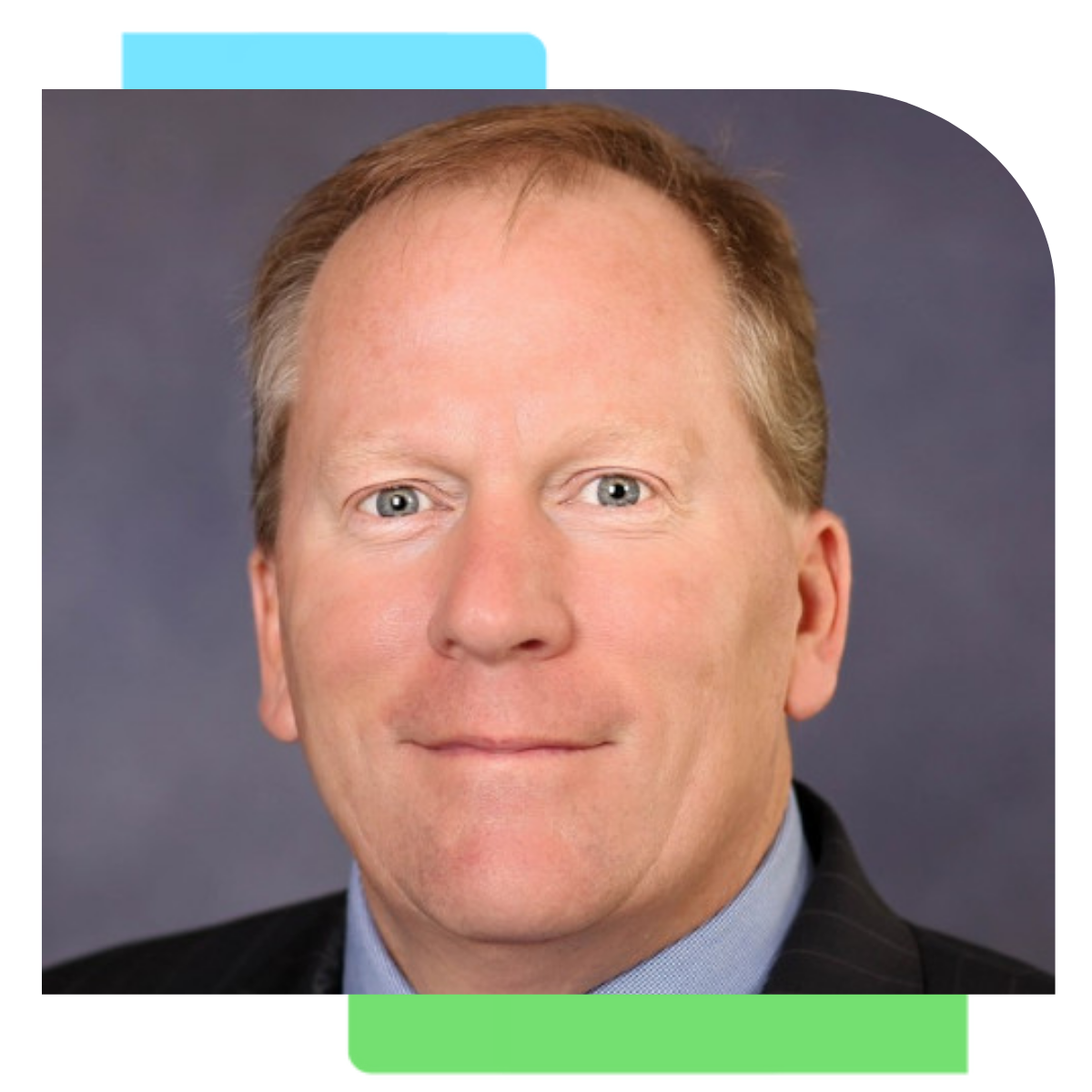
Steven Swan
Steve Swan is the CEO of The Swan Group, a boutique executive search firm specializing in technology leadership placements for the pharmaceutical and biotech industries. Building on more than 25 years in recruitment—and a legacy started by his mother over five decades ago—Steve has spent his career connecting visionary CIOs, CISOs, and CTOs with companies poised for growth. Known for his consultative approach, he goes beyond résumés to align leaders’ skills and personalities with an organization’s mission, culture, and strategic goals. Under his leadership, The Swan Group has placed over 70 elite IT professionals at a single biotech client, earning a reputation for creating “true matches” that transform companies. Passionate about the human side of hiring, Steve is also the host of the Biotech Bytes podcast, where he shares insights on data readiness, AI, and the evolving future of biotech talent.