
Q4 2025 HIRE Report

Q4 2025 HIRE Report
Quarterly Hiring Insights and Recruiting Environment (HIRE) Report by Advanced RPO
Amid a steady stream of negative economic headlines, the state of hiring is concerning at best and signals a potential recession at worst. Hiring remains inconsistent across industries, yet beneath the surface, we’re seeing shifts that organizations can capitalize on.
The Q4 HIRE report looks at three trends reshaping how we think about talent: the urgent need to rebrand skilled trades, the reality gap between AI hype and actual recruiting practices, and strategic moves companies can (and should) make during hiring slowdowns.
We start with a brief recap of major headlines across key industries, then wrap with actionable next steps – including a free resource – to help you prepare for a strong 2026.
I hope this report gives you greater clarity and confidence as you navigate your hiring goals.

Pam Verhoff
President and CEO, Advanced RPO

Hiring Insights
The skilled trades need a rebrand
As AI threatens the white-collar job landscape, skilled trades have emerged as one of the most secure career paths.
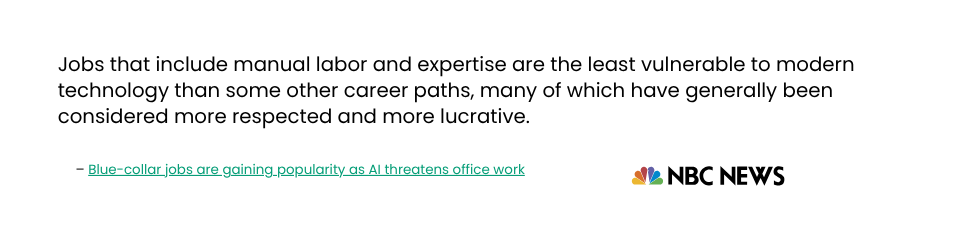
Not only are these jobs marked “safe” from AI, but there’s two more reasons these jobs are in the headlines. First, demand is spiking, with massive efforts to reshore manufacturing here in the US. And second, supply is dwindling thanks to a skilled trades retirement crisis, with tradespeople leaving the workforce and taking their knowledge with them.
And yet, there’s a big perception problem keeping Gen Z from pursuing this industry. Despite competitive compensation and job security, skilled trades still battle outdated stereotypes as being low-paid, blue-collar, dirty careers.
So let’s talk about some recruiting strategies that actually work.
Employers – stop looking at the skilled trades as “hourly worker roles with more requirements.” They’re high-tech, high-skill professions.
Shape these roles for the long haul. Beyond competitive wages, provide clear advancement opportunities, including paths to supervisory roles or business ownership.
Your best recruiters are your current skilled workers. Create referral programs and have them share success stories at schools and community events.
Skilled trades represent one of the most stable and lucrative career paths in today’s economy. Organizations that find a way to fill these roles will have a significant advantage.
For more on this topic, check out Recruiting Skilled Trades Has Changed: Here’s How to Keep Up.
The AI recruiting reality gap
A recent survey found a significant disconnect between candidate perceptions and employer practices when it comes to using AI in recruiting. Job seekers believe companies are extensively using it to automatically screen them in or out of positions. Surprise – they’re not.
While there’s considerable hype, there’s no hard evidence of widespread AI adoption in recruiting today. But the real barrier isn’t capability. It’s buy-in from legal departments. Many (if not most) companies are taking a conservative “wait and see” approach due to concerns about algorithmic bias, regulatory compliance and potential legal exposure.
Here’s our advice to anyone out there recruiting in this environment right now.
- Educate candidates about your actual hiring process (and where and why you use AI). Transparency always creates a better candidate experience and builds trust.
- Document everything! Whether you use AI or not, clear documentation protects you against discrimination claims and ensures consistent, fair hiring practices.
- Position yourself as an AI champion who actively researches and recommends AI solutions to leadership (aligned with their risk tolerance).
For more on this topic from our expert, Jan Grohoske, check out AI in Recruiting: Separating Myth from Reality.
What to do when you’re not hiring (or firing)
Many companies have found themselves in a no-hire, no-fire talent zone. The market’s not stable enough to add headcount, but it’s not bad enough to warrant layoffs. This can actually be a good thing for HR.
Our #1 piece of advice for recruiters during “downtime”? Become a retention strategist. The current economic climate has created an unexpected opportunity to focus on what (and who!) companies often neglect: their employees. Recruiters can apply their people expertise to identify flight risks and create engagement efforts that create a stronger workforce and employer brand.
Not sure where to start? Here’s 20 ways to do this right now.
- Conduct stay interviews
- Map career progression paths
- Create skills gap analyses
- Develop mentorship programs
- Design cross-team opportunities
- Establish regular check-ins
- Build job shadowing programs
- Host lunch-and-learn sessions
- Develop employee referral programs
- Analyze internal promotion metrics
- Design recognition programs
- Facilitate skip-level meetings
- Create employee resource groups
- Develop succession planning
- Design team-building initiatives
- Evaluate office policies
- Create internal networking events
- Develop feedback systems
- Build career coaching programs
- Track retention metrics
The most successful recruitment teams are using this period to build infrastructure that will serve them well when hiring ramps up again. They’re developing stronger relationships with existing employees and setting themselves up to make a great first impression with future candidates.
Recruiting Environment

Life Sciences
Articles we read

Manufacturing

Food & Beverage
Articles we read
Powering Through Peak Season: Summer & Fall Strategies for F&B/CPG Success
Food Industry Executive
Top Food and Beverage Disruptions in 2025
Food Navigator
Looking Ahead to Q1 2026
Our team has decades of experience helping employers design better hiring strategies. While every organization is unique, many leaders face the same challenge: not knowing where to begin.
That’s where our Talent Acquisition Planning Toolkit comes in. It isn’t meant to be a full workforce plan — instead, it’s a directional guide to help you start asking the right questions.
How can you make a greater business impact? What changes should you make to your hiring practices? Do you have the right team, budget, and tools to be effective?
We’ve taken the prompts and frameworks we use with our clients and packaged them into a resource designed to get your wheels turning in five key areas:
- Grounding your strategy in reality
- Forecasting talent needs
- Resourcing your strategy for maximum impact
- Assessing risk through a strategic lens
- Prioritizing for impact
If you’re beginning to think about 2026 but aren’t sure where to start, this toolkit offers a structured way to kick off the conversation.
Get instant access to our 2026 TA Planning Toolkit
For more information about any of these topics or to learn more about how an RPO partner can help you reach your hiring goals, please contact us.
Subscribe
Get updates and new content delivered right to your inbox. Unsubscribe anytime.
Featured resource
2026 TA Planning Toolkit
Align your hiring strategy with business goals, uncover hidden risks, and build a future-ready TA function—without starting from scratch.